

As Southeast Asia expands its renewable energy footprint, Empty Fruit Bunches (EFB), a primary byproduct of palm oil milling, have emerged as a high-potential feedstock for solid biofuel production. In Malaysia and Indonesia alone, palm oil processing generates tens of millions of tonnes of raw EFB annually.
While raw EFB was historically treated as agricultural waste or returned to fields for mulching, converting EFB into high-density biomass pellets unlocks significant commercial value. Commercial power plants and industrial power utilities across Japan, South Korea, and Europe increasingly import EFB pellets as a coal substitute.
However, processing raw EFB into export-grade pellets requires robust engineering to overcome strict international quality standards, moisture challenges, and material abrasive traits.
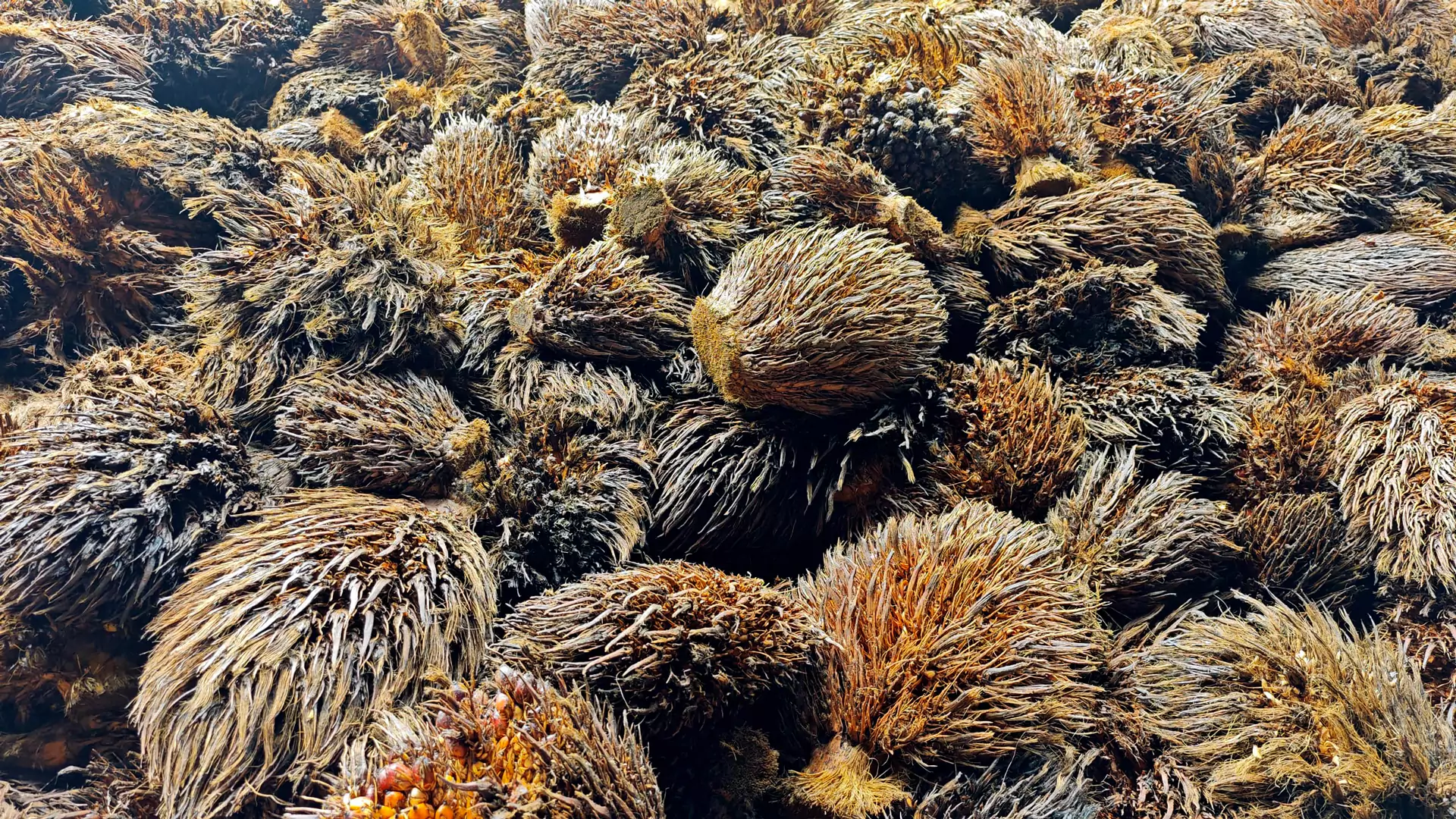
Why Is Processing EFB So Challenging?
Unlike standard wood chips or sawdust, raw Empty Fruit Bunches present distinct mechanical and chemical processing hurdles:
- High Moisture Content: Freshly discharged EFB from palm oil mills typically contains upwards of 60% moisture, alongside residual palm oil content.
- Tough, Fibrous Structure: EFB consists of long, strong vascular bundles that resist standard hammer mill crushing unless properly shredded first.
- High Ash and Potassium Content: Raw EFB contains naturally occurring alkali metals (such as potassium and chlorine) and silica sand, which can lead to slagging and boiler tube corrosion if not properly managed during pre-treatment.
- Corrosive & Abrasive Nature: Residual moisture and sand cause severe wear and tear on standard pellet mill dies and rollers.
Meeting international standards (such as JMR or ENplus-equivalent power utility specifications) requires an integrated engineering line capable of reducing moisture to below , lowering ash content, and achieving a net calorific value above .
The Step-by-Step EFB Pellet Manufacturing Process
Converting raw, wet palm fiber into dense, durable pellets involves six sequential engineering phases:
- Size Reduction
Whether the EFB comes in raw bunch, pressed, or pressed & shredded, some level of size reduction is mandatory. It is typical to see shredders or fiber cutters used at this step to not only reduce the fiber size and length to even, and consistent lengths, but some moisture is also reduced in this step. This step ensures smooth material flow into the downstream processing equipment.
- Thermal Drying
Moisture reduction is the most energy-intensive stage. Rotary drum dryers or multi-pass flash dryers utilize hot flue gases (often generated by combusting biomass waste on-site) to reduce moisture from down to . Advanced dryer designs include spark detection and automated fire suppression systems to manage dust explosion risks.
- Fine Pulverization (Hammer Milling):
Dried EFB fiber passes through fine-mesh hammer mills to produce uniform, pulverized biomass powder. Uniform particle sizing is critical for achieving high physical durability and consistent density during pelletization. The conditioned fiber is fed into ring-die pellet mills running specialized die compression ratios. High mechanical pressure and frictional heat soften natural lignins within the palm fiber, binding the material into solid, cylindrical pellets ( diameter) without requiring chemical additives.
- Cooling, Screening & Packaging:
Freshly extruded pellets exit the mill hot and soft. Counter-flow coolers reduce pellet temperature to within of ambient air, hardening the pellets. Vibrating screens remove fines (which are recycled back to the pelletizer), and finished pellets are routed to storage silos or jumbo-bag packing lines for export.
Key Quality Specifications for Export-Grade EFB Pellets
International energy buyers enforce strict quality criteria. A well-designed plant consistently meets or exceeds the following baseline specifications:

Key Factors for Plant ROI and Operational Longevity
Investing in an EFB pellet production plant requires balancing initial capital expenditure (CAPEX) with long-term wear-and-tear costs (OPEX):
- Wear-Resistant Alloy Selection: Due to silica sand accumulation on palm bunches, pellet die rings and roller shells must be forged from high-chrome alloy steel to extend service life and minimize maintenance downtime.
- Integrated Heat Recovery: Utilizing waste heat from nearby palm oil mill boilers or power generators for the rotary drying phase significantly reduces plant operating costs.
- Explosion & Fire Prevention: Dry palm fiber dust is volatile. Implementing dust extraction systems, cyclone separators, and continuous temperature monitoring safeguards human operators and equipment assets.
Partner with Turnkey Biomass Engineering Specialists
Transforming challenging agricultural residues like Empty Fruit Bunches into premium industrial fuel demands comprehensive process engineering, from raw material washing and dewatering to die design and plant automation.
Based in Malaysia, our engineering team designs, fabricates, and commissions complete turnkey EFB pelletizing plants tailored specifically for palm oil mills and bioenergy exporters.
Whether you are looking to monetize agricultural waste, upgrade an existing production line, or build a greenfield biomass pellet export facility, our custom turnkey solutions deliver maximum uptime, low operational costs, and guaranteed output quality.