

Understanding Biomass Gasification: A Beginner’s Guide to Clean Energy Conversion
As industries across Malaysia and Southeast Asia pivot toward sustainable energy and carbon reduction goals, biomass has taken center stage. While direct combustion (burning waste to produce steam) is a familiar approach, biomass gasification has emerged as a significantly cleaner, more efficient, and versatile thermal conversion technology.
Whether you operate in palm oil processing, wood manufacturing, or agricultural processing, understanding biomass gasification can help your plant reduce reliance on fossil fuels, optimize waste management, and lower operating costs.
What is Biomass Gasification?
Biomass gasification is a thermochemical process that converts organic material into a combustible gas mixture known as synthesis gas or syngas. Unlike direct incineration, which completely burns fuel in an abundance of oxygen to release heat, gasification occurs in a controlled, oxygen-starved environment at elevated temperatures (typically between and ). Instead of producing open flame and smoke, the intense heat breaks down the chemical bonds of the organic matter, turning solid biomass into a gaseous fuel.
Regional Biomass Feedstocks in Malaysia
The choice of feedstock directly impacts gasification performance, system design, and syngas composition. Malaysia’s thriving agricultural, palm oil, and forestry sectors generate millions of tonnes of organic residues annually. Gasification transforms these abundant regional waste streams into high-value energy.
- Palm Oil Residues: The palm oil milling industry generates massive volumes of Empty Fruit Bunches (EFB) and Mesocarp Fiber, which typically carry high moisture levels and serve as ideal candidates for on-site process steam or captive power generation. Conversely, Palm Kernel Shells (PKS) possess a low moisture content and a high calorific value, making them an exceptional fuel for intense heat applications.
- Wood and Timber Residues: Wood processing industries produce vast amounts of wood chips, sawdust, and offcuts. Featuring low-to-medium moisture and low ash content, these feedstocks are ideal for industrial kilns, process steam boilers, and gasification-based heat recovery plants.
- Agricultural Residues: Farming operations provide consistent waste streams like rice husks and paddy straw. While these materials contain moderate moisture their unique chemical composition makes them well-suited for decentralized thermal energy and high-purity biochar co-production.
Essential fuel characteristics including moisture content, bulk density, particle size, and ash composition dictate how feedstock behaves inside a gasifier. Proper fuel preparation, such as mechanical shredding or pre-drying, ensures optimal conversion and smooth plant operations.
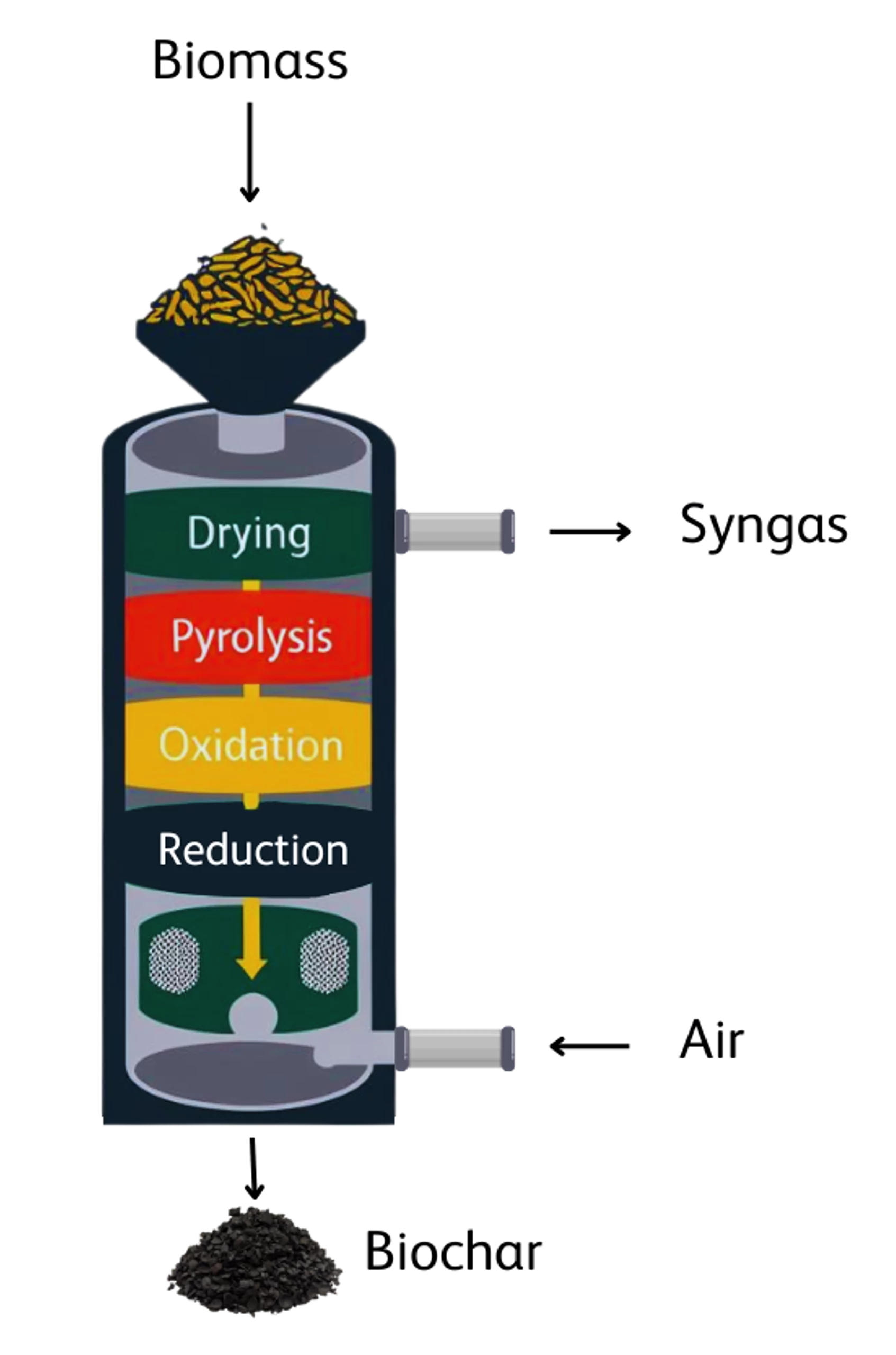
How Does Biomass Gasification Work? (The 4 Stages)
The conversion of solid biomass into clean syngas happens through four sequential thermochemical stages inside the gasifier reactor:
- Drying (>100°C): Heat drives off moisture trapped within the raw biomass feedstock as steam. Feedstocks with lower initial moisture content require less energy during this stage, preserving overall thermal efficiency.
- Pyrolysis (200°C – 500°C): In the total absence of oxygen, thermal decomposition breaks down the complex organic polymers (cellulose, hemicellulose, and lignin). The biomass breaks into volatile gases, condensable tars, and a solid carbon residue called biochar.
- Oxidation (800°C – 1,200°C): A controlled, limited amount of air or oxygen is introduced into the reactor. A portion of the char and volatile gases combusts with oxygen, generating intense heat and releasing Carbon Dioxide (CO₂) and water vapor (H₂O). This exothermic reaction provides the thermal energy required to power the rest of the gasification process.
- Reduction (600°C – 900°C): In the oxygen-deprived zone, the biochar reacts at high temperatures with the and steam produced during oxidation. These chemical reactions yield the core components of combustible syngas: Carbon Monoxide (CO), Hydrogen (H₂), and small amounts of Methane (CH4).
What is Syngas and How is it Used?
The resulting syngas is a versatile gaseous fuel. Once conditioned and cleaned of particulate matter or tar residues, syngas can serve multiple industrial applications:
- Direct Thermal Energy: Syngas can replace natural gas, LPG, or diesel in industrial boilers, dryers, kilns, and furnaces.
- Power Generation: Fed into gas engines or turbines, syngas generates electricity for factory self-consumption or grid feed-in.
- Combined Heat and Power (CHP): Co-generating steam and electricity maximizes overall system efficiency to over 80%.
- Biofuels & Chemicals: High-purity syngas can be refined into liquid biofuels, methanol, or green hydrogen.
Gasification vs. Direct Incineration: Why Make the Switch?
While direct combustion boilers remain common, gasification provides key operational advantages:
- Higher Thermal Efficiency: Gasification achieves greater thermal efficiency when integrated into multi-generation (CHP) systems.
- Lower Emissions: Because gasification occurs under controlled, starved-oxygen conditions, emissions of Nitrogen Oxides (), Sulfur Oxides (), and particulate matter are significantly lower than traditional burning.
- Product Versatility: Incineration yields only heat. Gasification produces syngas—a storable, transportable fuel—along with biochar, a valuable agricultural soil conditioner and carbon sink.
Key Considerations for Engineering a Gasification System
Implementing a biomass gasification plant is not a one-size-fits-all process. A successful commercial setup requires precise engineering based on several variables:
- Feedstock Characteristics: Moisture content, particle size, ash melting point, and bulk density determine reactor geometry.
- Gasifier Type: Depending on scale and fuel type, engineers select between Fixed Bed (updraft/downdraft for small-to-medium scale) or Fluidized Bed reactors (bubbling/circulating for large-scale industrial plants).
- Gas Cleaning & Cleanup: Removing tars, particulates, and moisture is critical to protecting downstream engines or burners from wear and fouling.
Partner with Regional Turnkey Experts
Converting local organic waste streams like Empty Fruit Bunches or wood chips into a stable power and thermal source requires integrated engineering—from fuel drying and handling to gas clean-up and plant integration.
Based in Malaysia, our engineering team provides complete turnkey biomass engineering solutions. We design, fabricate, and commission custom biomass gasification plants optimized specifically for Southeast Asian agricultural and wood residues.
Whether you aim to reduce fuel costs, cut site carbon emissions, or monetize biomass waste streams, tailored engineering ensures your facility operates at maximum economic efficiency and reliability. Contact our engineering team today to schedule a feasibility study or learn how custom gasification systems can integrate into your current operations.